
FISSURU-IN-ANO (Is an Anal Fissure)
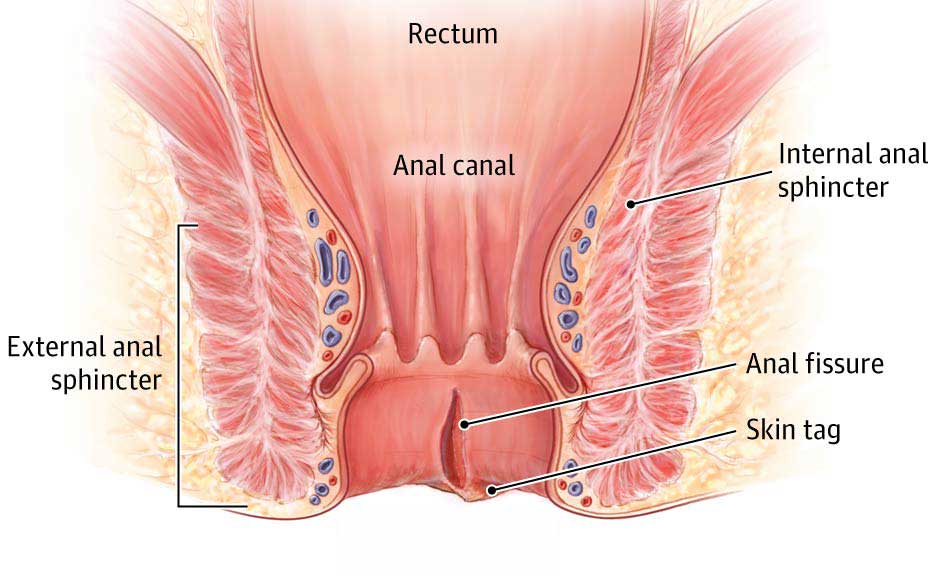
An anal fissure (fissure-in-ano) is a small, oval shaped tear in skin that lines the opening of the anus. Anal fissure may occur when passing hard or large stools. Fissures typically cause severe pain and bleeding with bowel movements. Fissures are quite common in the general population, but are often confused with other causes of pain and bleeding, such as hemorrhoids. Anal fissures can occur at any age and have equal gender distribution. Most (85-90%) fissures occur in the posterior (back) midline of the anus with about 10-15% occurring in the anterior (front) midline. A small number of patients may actually have fissures in both the front and the back locations. Fissures located elsewhere (off to the side) should raise suspicion for other diseases (see below) and will need to be examined further.
Symptoms Of An Anal Fissure:
- A visible tear in the skin around your anus
- A skin tag, or small lump of skin, next to the tear
- Sharp pain in the anal area during bowel movements
- Streaks of blood on stools or on toilet paper after wiping
- Burning or itching in the anal area
Causes:
An anal fissure most often occurs when passing large or hard stools. Chronic constipation or frequent diarrhea can also tear the skin around your anus. Other common causes include:
- straining during childbirth or bowel movements
- decreased blood flow to the anorectal area
- overly tight or spastic anal sphincter muscles
Surgical Treatments:
If you have a chronic anal fissure that is resistant to other treatments, or if your symptoms are severe, your doctor may recommend surgery.
- The best surgery for anal fissures is called a lateral internal sphincterotomy, which involves dividing the internal layer of the anal sphincter to stop the painful spasms and allow healing.
- Surgical options for treating anal fissure include Botulinum toxin (Botox®) injection into the anal sphincter.
Lifestyle and Home Remedies
Several lifestyle changes may help relieve discomfort and promote healing of an anal fissure, as well as prevent recurrences:
- Add fiber to your diet. Eating about 25 to 30 grams of fiber a day can help keep stools soft and improve fissure healing. Fiber-rich foods include fruits, vegetables, nuts and whole grains. You also can take a fiber supplement. Adding fiber may cause gas and bloating, so increase your intake gradually.
- Drink adequate fluids. Fluids help prevent constipation.
- Avoid straining during bowel movements. Straining creates pressure, which can open a healing tear or cause a new tear.